
PCB Design FOR THE
Software - DEFINED
Vehicle ERA
Design, validate, and collaborate in one environment. The Allegro X PCB platform is built for the electrical and process complexity of modern automotive electronics.
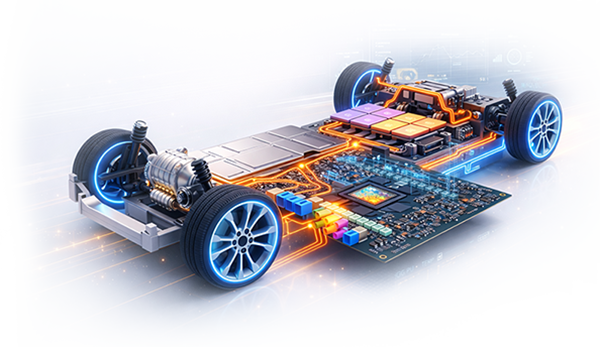
- EV and Powertrain Electronics
- Domain Controllers and High-Speed Compute
- Radar and ADAS Sensor Modules
- Digital Thread and Cross-Domain Development
EV and Powertrain Electronics
ENGINEERING IMPACT
Improved power and thermal reliability with fewer redesign cycles
Battery systems, inverter control boards, engine control modules, and 12V and 48V power distribution electronics operate with large transient currents, fast switching edges, and dense sensing networks. Engineers must control PDN impedance, minimize loop inductance, and isolate sensitive measurement circuits from switching noise.
Late discovery of power integrity and thermal problems often leads to additional prototype spins.
ALLEGRO X PCB CAPABILITIES
- In-design power integrity workflows powered by Sigrity X for early PDN analysis
- Schematic-level MTBF reliability and electrical overstress checking before layout
- Constraint-driven implementation of power distribution networks
- Integration with Celsius thermal analysis to evaluate heat dissipation in high-current regions
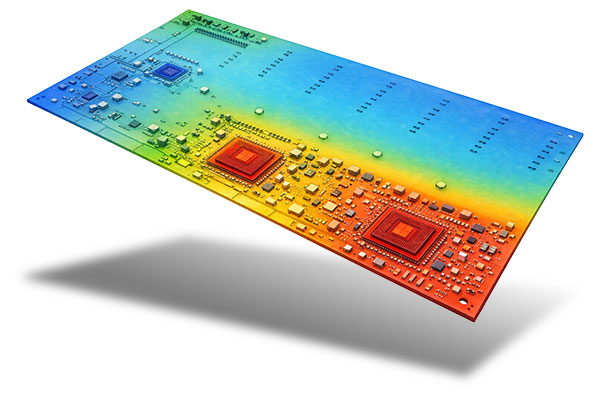
Domain Controllers and High Speed Compute Platforms
ENGINEERING IMPACT
Consistent high-speed behavior and scalable platform reuse while preserving constraint integrity
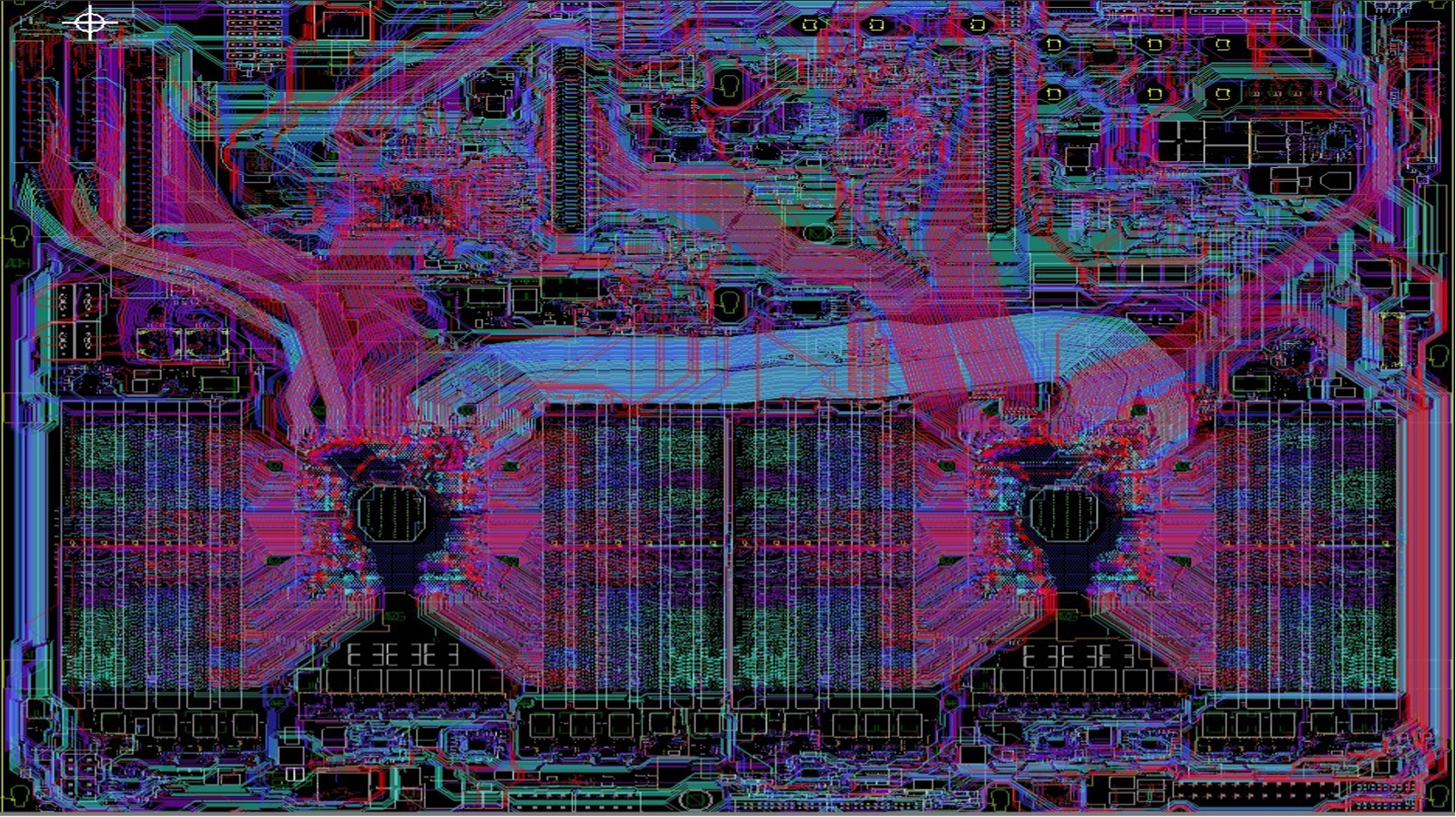
Centralized domain controllers in EV and Internal Combustion Engine vehicles aggregate automotive Ethernet, PCIe, and memory interfaces for ADAS, infotainment, and powertrain coordination. These boards must scale across vehicle variants while preserving signal integrity and design intent.
Configuration complexity increases as platforms are reused across programs.
ALLEGRO X PCB CAPABILITIES
- Scalable Constraint Management shared between schematic and PCB
- Reusable design blocks and variants to support scalable platform architectures
- Concurrent multi-user schematic and layout editing for distributed teams
- Integrated high-speed routing automation and topology-driven implementation
Radar and ADAS Sensor Modules
ENGINEERING IMPACT
Improved RF performance and reduced EMI risk in compact sensor modules
Radar and ADAS sensor modules integrate millimeter-wave RF front ends, high-speed data converters, embedded processing, and precision analog circuits within compact, mechanically constrained assemblies. These systems must control electromagnetic coupling, preserve signal integrity across mixed RF and digital domains, and maintain stable performance under vibration and temperature extremes
Mechanical packaging density and antenna integration further increase sensitivity to layout decisions and electromagnetic behavior.
ALLEGRO X PCB CAPABILITIES
- Integrated AWR Microwave Office to Allegro X RF-PCB workflow for RF block design and reuse
- Connectivity to Clarity 3D Solver for electromagnetic and EMI analysis
- Mixed-signal layout environments with region-based constraint control
- ECAD/MCAD co-design with 3D visualization and bi-directional data exchange supporting Dassault Systèmes' CATIA and SOLIDWORKS, PTC Creo, and Siemens NX
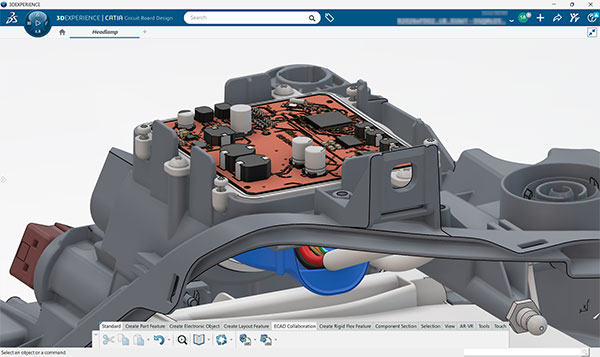
Digital Thread and Cross-Domain Automotive Development
ENGINEERING IMPACT
Consistent design intent and controlled collaboration across complex automotive programs
Automotive electronic systems are developed by distributed teams spanning schematic design, PCB layout, IC packaging, mechanical integration, and manufacturing preparation. These workflows involve frequent design revisions, variant management, and cross-discipline coordination, where inconsistent data and uncontrolled changes introduce traceability gaps and integration risk.
As EV and Internal Combustion Engine platforms share architectures and reuse subsystems across vehicle programs, maintaining synchronized design intent becomes increasingly complex.
ALLEGRO X PCB CAPABILITIES
- Centralized design data management with version-controlled libraries
- Concurrent multi-user capture and layout environments supporting distributed development
- IC-Package-PCB co-design connectivity planning
- Configurable lifecycle workflows with role-based approvals and automated change notifications
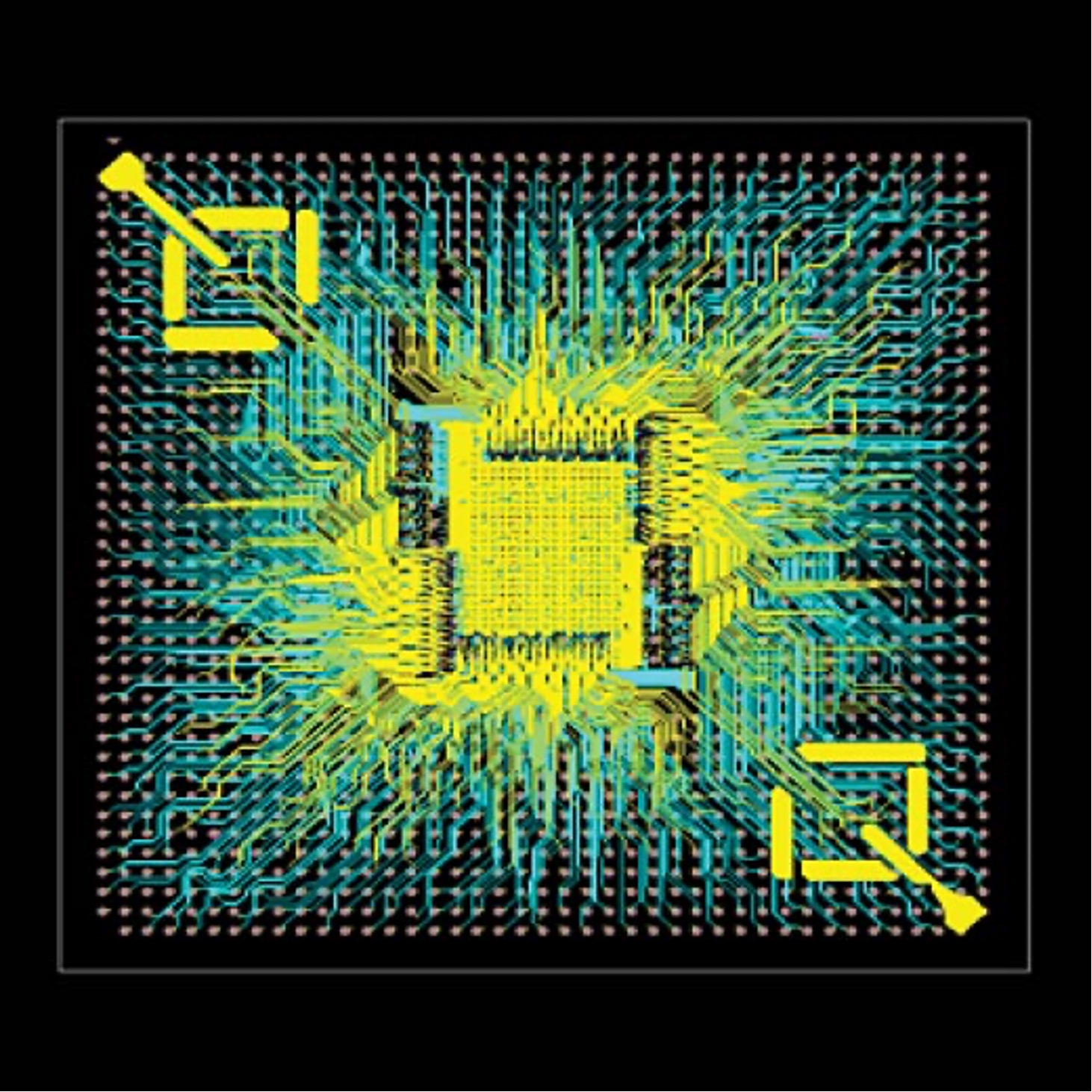
Evaluate The Allegro X PCB platform for Automotive Electronic Development
Automotive electronics programs have no tolerance for problems discovered late. PDN instability on the bench, thermal violations after the first prototype spin, and traceability gaps surfacing during a functional safety audit all share a common root cause: design intent, electrical validation, and process control running as disconnected workflows where constraint drift, uncontrolled changes, and electrical risk accumulate invisibly until the program has no room to recover.
Allegro X PCB addresses both dimensions in a single environment. PDN impedance, thermal, signal integrity, and EMI analysis run during implementation before placement is locked. Centralized constraint management, version-controlled libraries, role-based approvals, and concurrent multi-user editing keep distributed OEM and Tier 1 teams synchronized and design changes traceable across the full program lifecycle.
The trial gives you full access to evaluate Allegro X on your own designs. See firsthand how connecting design validation and process control in a single environment moves problem discovery earlier and keeps your program on track.
Complete the form to request your free trial.